Portal Boom Crane: What Innovations Are Shaping Its Future Design?
Portal Boom Crane: What Innovations Are Shaping Its Future Design?
Portal boom cranes are the backbone of heavy-duty material handling across ports, shipyards, industrial yards, and construction sites, enabling efficient loading, unloading, and precision placement of heavy cargo. As global trade expands, infrastructure develops, and sustainability becomes a non-negotiable priority, the design of portal boom cranes is evolving rapidly to meet new industry demands. From automation and smart technology integration to energy efficiency and advanced materials, a wave of innovations is redefining what these workhorses can do. In this article, we explore the key innovations shaping the future design of portal boom cranes, their impact on operational efficiency, and how they are addressing the challenges of modern industrial environments.
1. Automation and Remote Operation: Redefining Safety and Efficiency
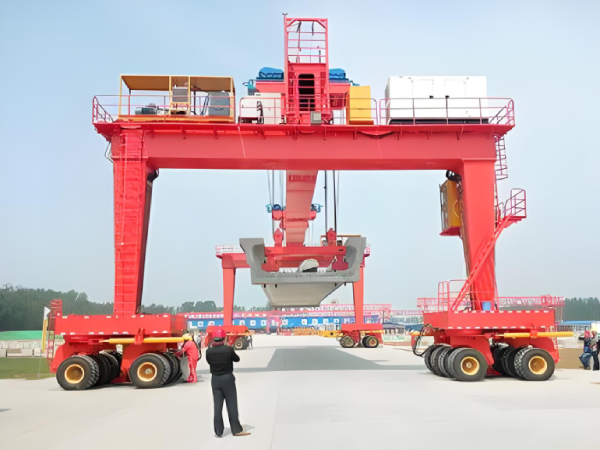
One of the most transformative innovations in portal boom crane design is the shift toward full automation and remote operation. Traditional crane operation requires skilled operators to work in high-risk environments, often exposed to harsh weather, heavy noise, and potential hazards. Modern portal boom cranes are now integrated with advanced automation technologies that minimize human intervention, enhance safety, and boost productivity.
Automated portal boom cranes leverage laser radar, visual sensing systems, and PLC (Programmable Logic Controller) control to perform tasks with unparalleled precision. These systems enable features like automated load positioning, collision avoidance (powered by GPS and proximity sensors), and scheduled maintenance triggers—eliminating human error and reducing the risk of accidents. For example, Konecranes’ advanced remote monitoring system, TruConnect®, allows operators to track crane performance in real time and control operations from a safe, centralized control room, rather than on-site cabins.
Remote operation takes this a step further, enabling operators to control cranes from miles away using intuitive interfaces and real-time video feeds. This innovation is particularly valuable for port and offshore applications, where harsh conditions or remote locations make on-site operation challenging. By reducing the need for on-site personnel, automation also lowers labor costs and improves operational continuity, even in extreme weather or high-risk scenarios.
2. Energy Efficiency and Green Technology: Aligning with Sustainability Goals
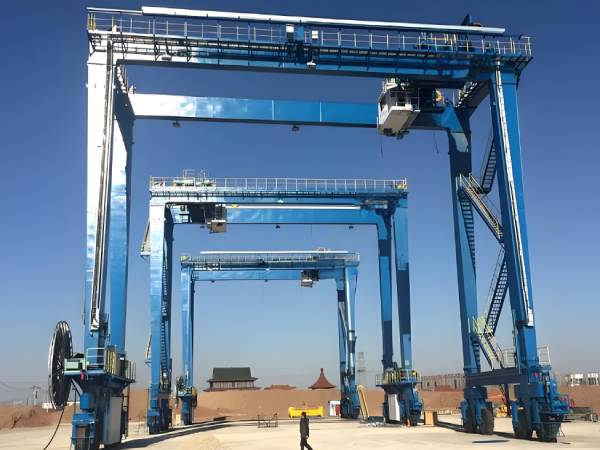
As industries worldwide prioritize carbon neutrality and sustainability, portal boom crane design is shifting toward energy-efficient and eco-friendly solutions. Traditional cranes rely heavily on diesel engines, which are costly to operate and contribute to greenhouse gas emissions. The future of portal boom cranes lies in green power sources and energy-saving technologies that reduce environmental impact without compromising performance.
Electric-driven systems with AC variable frequency drives (VFD) are becoming standard, replacing diesel engines to reduce emissions and lower energy consumption. These systems adjust motor speed based on load requirements, optimizing energy use and reducing wear on components. Additionally, “main power + energy storage” systems—such as supercapacitors—allow cranes to capture and reuse energy generated during braking or load lowering, cutting energy consumption by up to 30%. Some advanced models even integrate solar panels to supplement power needs, further reducing reliance on grid electricity.
The shift to green technology is also driven by market demand and regulatory pressures. The global portal crane market is projected to grow at a CAGR of 4.5% through 2032, with sustainability as a key growth driver. Manufacturers are responding by designing cranes that meet strict environmental standards, such as zero-emission operation for indoor or urban applications, and low-noise designs for residential or sensitive industrial areas.
3. Advanced Materials and Structural Optimization: Lightweight, Durable, and Versatile
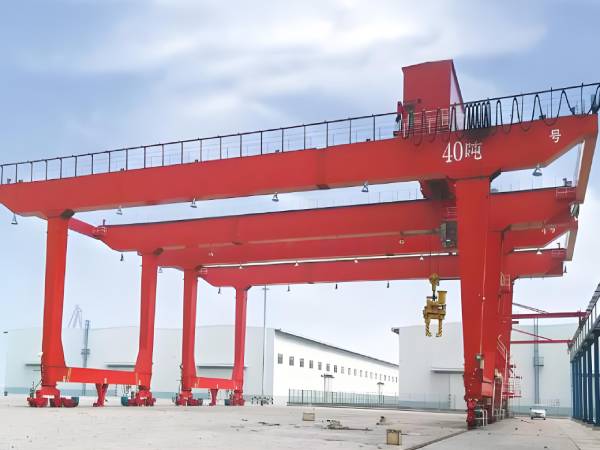
The structural design of portal boom cranes is being revolutionized by the use of advanced materials and optimized configurations, balancing strength, weight, and versatility. Traditional cranes rely on heavy steel structures, which increase energy consumption and require more robust foundations. Future designs are incorporating lightweight, high-strength materials to address these challenges.
Carbon fiber composites and high-tensile steel are replacing traditional steel in key components, such as booms and gantries. These materials offer superior strength-to-weight ratios, reducing the overall weight of the crane by up to 20% while maintaining or improving load capacity. A lighter crane requires less energy to operate, reduces wear on rails and foundations, and can be deployed in locations with limited structural capacity—such as older ports or temporary construction sites.
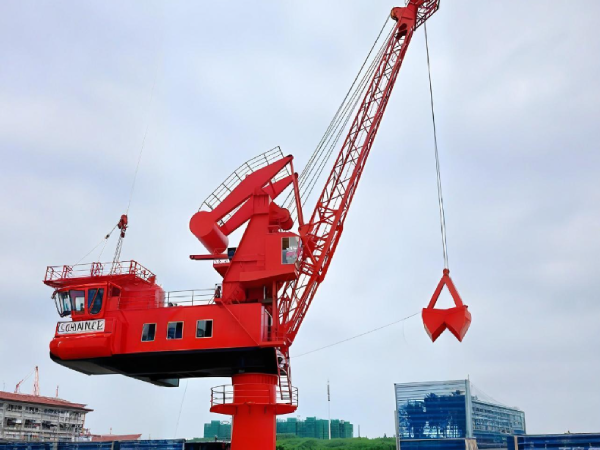
Structural optimization is another key focus. Four-bar linkage portal cranes, for example, feature an optimized boom system that minimizes horizontal movement, ensures stable amplitude changing, and reduces power consumption, making them ideal for high-efficiency applications. Single boom designs, meanwhile, prioritize simplicity, light weight, and low cost, with a working level of A7, while four-bar linkage models reach A8, offering higher durability for heavy-duty use. These optimized designs ensure that cranes can adapt to different applications—from loading 5000 to 10,000-ton ships (with a 35m operating radius) to handling bulk materials or large industrial components.
4. IoT and AI Integration: Predictive Maintenance and Smart Performance
The Internet of Things (IoT) and Artificial Intelligence (AI) are transforming portal boom cranes into “smart” assets, capable of self-monitoring, predictive maintenance, and performance optimization. IoT sensors embedded in critical components—such as hoisting mechanisms, booms, and travel systems—collect real-time data on temperature, vibration, load stress, and wear.
This data is analyzed by AI algorithms to identify potential issues before they escalate into costly breakdowns. Predictive maintenance eliminates unplanned downtime, which is a major cost driver in industrial operations, and extends the lifespan of crane components. For example, AI can detect abnormal vibration in the hoisting mechanism, alerting maintenance teams to replace worn parts before a failure occurs. This not only reduces maintenance costs but also ensures that cranes operate at peak efficiency.
AI also optimizes operational performance by analyzing historical data to adjust crane settings for specific tasks. For instance, the system can automatically adjust hoisting speed, derricking speed, or swing speed based on load weight and operating conditions—maximizing efficiency while minimizing energy use. Some cranes even feature AI-powered load sway control, a patented technology that minimizes load movement during operation, improving precision and safety.
5. Enhanced Safety Features: Prioritizing Operator and Site Protection
Safety has always been a top priority in crane design, and future portal boom cranes are integrating advanced safety features to protect operators, workers, and cargo. Beyond traditional safety measures like overload protection and limit switches, modern cranes are incorporating intelligent systems that proactively mitigate risks.
Collision avoidance systems, powered by GPS and visual sensors, prevent cranes from colliding with other equipment, structures, or workers on-site. Overload limit systems with alarm and shutdown capabilities automatically stop operations if the load exceeds the crane’s capacity, preventing structural damage or accidents. Wind protection devices are also being enhanced, with sensors that monitor wind speed and automatically adjust crane operations or lock the boom in place to prevent instability in high winds.
Ergonomic design is another key safety focus. Modern crane cabins are being upgraded with adjustable seats, improved visibility, and reduced noise levels, reducing operator fatigue and improving focus. For remote or automated cranes, safety systems are integrated with control rooms to ensure operators have full visibility of the work area and can intervene if needed.
6. Modular and Customizable Designs: Adapting to Diverse Applications
The future of portal boom crane design is increasingly modular and customizable, allowing manufacturers to tailor cranes to specific industry needs. Industries such as ports, construction, shipyards, and mining have unique requirements—from load capacity and operating radius to environmental conditions—and modular designs enable flexibility and scalability.
Modular components, such as interchangeable booms, spreaders, or hoisting devices, allow cranes to be reconfigured for different tasks—from handling containers to bulk materials or large industrial components. For example, a single portal boom crane can be equipped with a grab for bulk cargo, a container hoist for shipping containers, or an electromagnetic disk for metal materials, expanding its versatility and value.
Customization also extends to performance parameters. Manufacturers are offering cranes with adjustable operating radii, span lengths, and load capacities to meet the specific needs of different sites. For instance, YT-PE series four-bar linkage cranes are available with rated capacities from 16t to 40t and operating radii from 28m to 43m, while single boom models offer capacities up to 45t with operating radii up to 38m. This flexibility ensures that cranes can be optimized for efficiency in any application, from small ports to large-scale industrial yards.
The Future of Portal Boom Cranes: A Summary of Key Trends
The future design of portal boom cranes is shaped by a convergence of automation, sustainability, smart technology, and customization. As industries continue to evolve, these cranes will become more efficient, safer, and more adaptable—meeting the demands of global trade, infrastructure growth, and environmental responsibility. Key trends to watch include:
Full automation and remote operation to enhance safety and productivity.
Green technology integration, including electric drives and energy storage, to reduce carbon footprints.
Advanced materials and structural optimization for lightweight, durable designs.
IoT and AI-powered smart systems for predictive maintenance and performance optimization.
Enhanced safety features to protect operators and site personnel.
Modular and customizable designs to adapt to diverse industry needs.
With the global portal crane market expected to grow from USD 8 billion in 2023 to USD 12 billion by 2032, and portal slewing cranes projected to reach USD 1.9 billion by 2032, the demand for innovative, high-performance cranes will only increase. Manufacturers that embrace these innovations will be well-positioned to meet the needs of modern industries, while operators will benefit from lower costs, higher efficiency, and safer operations.
FAQs About Portal Boom Crane Future Innovations
Q1: How will automation impact portal boom crane operations?
Automation will reduce human intervention, minimize accidents, and boost productivity by enabling precise, 24/7 operation. Remote control and AI-powered systems will allow operators to manage cranes from safe locations, reducing labor costs and improving operational continuity.
Q2: What green technologies are being integrated into portal boom cranes?
Key green technologies include electric AC variable frequency drives, energy storage systems (supercapacitors), solar power integration, and zero-emission designs. These technologies reduce energy consumption by up to 30% and eliminate diesel emissions.
Q3: How do advanced materials improve portal boom crane design?
Lightweight, high-strength materials like carbon fiber composites and high-tensile steel reduce crane weight, lower energy use, and improve load capacity. They also reduce wear on foundations and rails, making cranes suitable for a wider range of sites.
Q4: What role does IoT play in the future of portal boom cranes?
IoT sensors collect real-time data on crane performance, enabling predictive maintenance, reducing downtime, and optimizing operational efficiency. AI algorithms analyze this data to identify potential issues and adjust crane settings for maximum performance.